Showing posts with label book review. Show all posts

Thursday, July 14, 2022

Book Review: Among the Innocent by Mary Alford


The main five things I look for in a novel are likable and authentic characters, engaging dialogue, a tolerable plot, and a smooth narrative. Today I’ll be reviewing Among the Innocent by Mary Alford, and I’ll examine each of these points in their order of importance.


Plot synopsis from Baker Publishing Group:


“When Leah Miller's entire Amish family was murdered ten years ago, the person believed responsible took his own life. Since then, Leah has left the Amish and joined the police force. Now, after an Amish woman is found murdered with the same MO, it becomes clear that the wrong man may have been blamed for her family's deaths.

As Leah and the new police chief, Dalton Cooper, work long hours struggling to fit the pieces together in order to catch the killer, they can't help but grow closer. When secrets from both of their pasts begin to surface, an unexpected connection between them is revealed. But this is only the beginning.

What will it mean for Leah--and Dalton--when the full truth comes to light?”


One. Are the characters likable? 

I liked the main characters in Among the Innocent. They weren’t the most interesting and developed characters ever, but I was rooting for them and they weren’t idiots. Well, Leah’s constant theme of “no, you should totally let me be involved in this even though I’m absolutely in extreme danger, and this is just making it easier for the killer, but see, I want to” did get a bit old, I’ll admit. 

Overall: Yes.


Two. Are the characters authentic?  (Are they realistic? Can you empathize with them?)

Plot is #4 on my list for a reason… it can be as compelling as you want, but if the characters are one-dimensional, the whole book is going to fall flat. As far as the authenticity of Leah and Dalton, I felt that it was middling. As usual for a woman author who jumps back-and-forth between the perspective of male and female main characters, the girl did seem more real. The driving force of her past made a lot of sense; Dalton’s didn’t as much. There is a reveal mid-book that makes you understand it a bit more, but my thoughts on that are better saved for the plot analysis. 


I did think the romance between the two main characters seemed a little contrived. Is this the only person of the opposite gender that they’ve met who is nice, honest, and seems to have a good heart?  Respect for another human being doesn’t generally create chemistry or attraction unless a person is out looking to fall in love, which was not the case with either of these characters. I can see that their backgrounds would make them identify with each other, but again, it doesn’t necessarily follow that they should fall for each other. I did, however, appreciate the lack of ogling the girl’s beauty or swooning over the guy’s muscles. 


One of the perspectives, interspersed here and there, was that of the villain. I understood why that was in there for the plot’s sake, but it did feel a little odd. We aren’t meant to understand or sympathize with the villain– he’s just plain messed-up– and having his perspective sometimes felt forced and awkward.

Overall: Sort of.


Three. Is the dialogue realistic and engaging?

I really love dialogue-driven books. It’s no wonder that Pride and Prejudice is my favorite Jane Austen novel–it’s the only one that begins with a conversation rather than a lengthy narrative. The dialogue in this book was, I would say, middling. There was nothing that particularly annoyed me, but nothing that particularly amazed me, either.

Overall: Sort of.


Four. Is it a good plot?

The plot was the main reason why I chose this book. While I used to be an avid reader of Beverly Lewis, at some point I grew tired of Amish fiction. This synopsis caught my eye, though. A murder mystery set in Amish country? Sure, I’ll bite. 


I will concede that this book was quite the page-turner, which I very much enjoyed. I did end up predicting a number of the plot points that were supposed to be a big reveal– whether this means it was predictable or I’m just really good at figuring stuff out, I’ll leave you to surmise. 


Some of the choices didn’t make a ton of sense to me, especially waiting until the middle of the story to reveal a certain detail about Dalton’s past. I feel like we could have had more sympathy for the character if we’d known earlier, but as it is, his motives just seemed a little off for most of it. 


While it certainly wasn’t right up there with Agatha Christie, the plot was sufficiently intricate to keep me engaged and not disappoint me at the end, so…

Overall: Yes.


Five. Is the narrative smooth and not distracting? (A.k.a., is it well-written?)

First of all, the book had several typos (misplaced quotation marks, that sort of thing) which made it feel rather unprofessional. Beyond typos, there were bits of the narrative that I had to read several times to correctly put the emphasis on the right part of the sentence and understand it, and that’s not something I normally have to do. As an English BA, I found myself rewording the sentences in my head in a way that would make them much clearer. (Perhaps this criticism should be more directed to the editor and less to the author.) Then, as far as preference goes, Alford seemed very fond of purposely incomplete sentences. Those annoy me. Annoy me a lot. Seem lazy. 

(See, that was my little joke, using incomplete sentences to talk about incomplete sentences. Anyway… moving on.) 


However, I have read much worse. So I’m going to say…

Overall: Sort of.


That brings my rating of the book to a total of 3.5/5, although for Goodreads I will round it to 4/5, because I really did enjoy it.


Note: I received a copy of this book for free in exchange for this review as part of the Revell Reads Blogger Program. I was not required to give a positive review.


Monday, June 13, 2016

Lady Susan (At Long Last!)


It is a very shaming thing for me to admit that it has taken me this long, in all my seven years of being a Janeite, to finish reading Lady Susan, the only other story besides the major six novels that Jane Austen completed during her adult life.  Such a fact is so very dreadfully mortifying.

But now I have finished it.  I still did not read the whole thing: I listened to most of it.  Which I used to think didn't exactly "count".  I have since changed my mind, having become a very busy young lady who has little time to read, and when she does have the time, has little energy for anything that requires more thinking than watching a movie or scrolling through Pinterest.  Driving to work, however, takes me 25 minutes each way, and therefore I have almost an hour of spare time right there-- but of course I can't read.  I can listen, however.  And so I have been doing.

It was hard for me to get into Lady Susan to begin with, and I think that's because I wasn't used to reading Jane Austen's epistolary style, even though it's predominantly how she wrote all of her earlier stories.  The characters and character names and complicated relations to each other can also be very confusing.  I found that listening to it (taking advantage of a free recording from Librivox) helped immensely because there was a different person to read each character.

Lady Susan is technically a "novella" and was written by Jane Austen roundabout 1795 (which means she was 19-21ish).  It was during her prolific beginnings of being an author, when she also wrote  First Impressions and Elinor and Marianne.  It's very different from her other stories, however, and more easily compared with her juvenilia.  Unlike our beloved favorites, it's not romantic comedy-- it's just comedy.

Wednesday, December 23, 2015

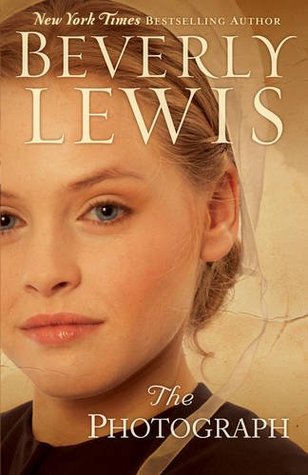
Book Review: The Photograph by Beverly Lewis


Since you can learn the synopsis of the book from other sources if you look around a bit, I won't bother to talk about it here.  My purpose in reviewing things is just to give my thoughts on how I liked it. 


As you can see from the rating, I didn't think it was one of Beverly Lewis' best, but I didn't think it was one of the worst either.  I liked the main characters, even the guy, which is somewhat unusual.  (His narrative actually seemed necessary for once, and wasn't as boring as I generally find a MMC's narrative to be.) As always, I appreciated the author's tactful approach to romance--that is, you could tell that plenty of emotions were involved without the characters being ridiculous and, more importantly, without a bunch of physical attraction nonsense.  (This is such a pet peeve of mine I feel like I should abbreviate that in my book reviews to PAN. Ha.)  


Saturday, October 10, 2015

Picture Book Review: Thankful

It occurred to me one day that there's no reason why I shouldn't be reviewing children's books.  There are some really cute ones available through the blogger review programs, and since they're short it won't be as big of a commitment to get it read on time.  Then I can have books to bestow upon children whenever I choose.  Whether or not I have children of my own someday, I'm sure I will have children in my life who are dear to me.  (I already do, being an auntie of eight!)

Sunday, July 10, 2011

Mr. Darcy's Diary by Amanda Grange

The story in this book is simply a re-telling of Pride and Prejudice, from Mr. Darcy’s point of view, so I needn’t say any more on that subject. It starts a couple months earlier than Pride and Prejudice, though, in the summer rather than early fall.

I enjoyed it as a whole. I read at least half of it in one day, and finished it within three. I can’t remember the last time I went through a book that fast – but we were on vacation, and I had a lot of spare time just to read, and read…it was quite nice.

However, it didn’t capture Mr. Darcy quite the way I think of him – I didn’t think it got the character as well as in Mr. Knightley’s Diary, which I just finished.

One thing I did appreciate is that, wherever possible, the quotes came straight out of Pride and Prejudice; If you ignore the fact that there were no italics whatsoever, which, I thought, lessened the meaning of some quotes. Also, it often happened that the whole conversation was not included – which is understandable, but disappointed me in several spots. For example, at Netherfield when Jane was sick, a conversation was cut off before Elizabeth says “[Y]our defect is a propensity to hate everybody,” to which Mr. Darcy answers (with a smile) “And yours is willfully to misunderstand them.” The instance that made me most sad is that the spot of the second proposal doesn’t include Mr. Darcy calling her “dearest, loveliest Elizabeth.” I don’t know about you, but that seems to me to be a very important Darcy quote!

There were a few other things that bugged me, too. One is Mr. Bingley. This book makes him out to be extremely inconsistent and fickle, especially where young women are concerned. I know he was supposed to be that way to a certain extent, but I don’t remember it being quite that exaggerated.

I wasn’t quite satisfied with how Mr. Darcy, it seemed, almost ‘accidentally’ proposed to Elizabeth the first time. It’s like he never actually acknowledged to himself that he was in love with her until that moment—he’d just thought himself too attracted to her…it’s hard to explain, but it’s not the way I would have pictured it.

And Lydia! I have always disliked Lydia, but she was made to be quite disgusting in here, I thought. “He did not make me elope with him, it was I who made him elope with me. Brighton was growing boring,” she declares to Mr. Darcy when he finds her and Wickham in London.

When Darcy tells Wickham he must marry Lydia, Wickham says “Come now, Darcy. You know I cannot do that…I need to marry an heiress.”

“Do you hear this?” Mr. Darcy asks Lydia, who answers “It does not signify. An heiress would bring us some money, then we could have a better house.”

Lydia is very irritatingly silly and senseless, but I wouldn’t imagine her saying that sort of thing.

One more thing: Jane, Bingley, Elizabeth, and Darcy have a double wedding. There was a double wedding in the 1995 movie too, but I don’t remember it being in the original novel. Am I wrong?

Anyways, it was very fun to read, and I recommend it to Jane Austen fans—especially those who already have a high opinion of Mr. Darcy.

Sunday, June 19, 2011

Mansfield Park: The Book

The story

Fanny Price, a girl of ten, undergoes a complete change of circumstances when her rich relatives the Betrams offer to bring her up, away from her large and under-privileged family. Small and scared, it takes time for her to grow accustomed to her new family, but she is much comforted by the kindness of her cousin Edmund.

By the time Fanny is eighteen, she has become quite necessary to the comforts of the extremely laid-back Lady Bertram, but her other aunt –Mrs. Norris, quite the opposite of her sister in every way – likes to spend her time criticizing and over-scolding Fanny for anything she can possibly think of. She is not of much consequence to her other cousins (Tom, Maria, and Julia) one way or another. Her uncle Sir Thomas, whom she always found rather frightening, had been gone for a year or two, his business dragging on longer than he’d expected.

Henry and Mary Crawford, the half-sister and brother of the parson’s wife, arrive at Mansfield and find their way into the emotions of the Bertram siblings. Henry is quick to capture both Maria and Julia’s fancy, while Edmund finds himself attracted to Mary.

Fanny is disturbed by all this – disgusted by Henry’s flirtatiousness, and worried about Edmund and Mary; not only does Fanny herself have tender feelings for Edmund, but she observes Edmund’s (sometimes purposeful) blindness to Mary’s faults and shortcomings. When he does notice something – be it an inappropriate way of looking at things, or something that goes against Edmund’s beliefs and principles – he is bothered by it for a while, but then conveniently forgets as he is distracted by her good looks, playful wit, and sparkling dark eyes.

After sporting with the Miss Bertrams’ hearts, Henry Crawford decides that he must make Miss Price attached to him, and though he tries very hard to be agreeable, he does not succeed with her so easily as he has with everyone else. Eventually, Mr. Crawford finds himself to be the one in love, and everyone is very happy about the proposed match – except Fanny herself.

Mansfield Park was Jane Austen’s third book, published in 1814.

My sentiments (for those who are already acquainted with Mansfield Park)

Now, there is some scandal in most of Jane Austen’s books, but Mansfield Park must top them all off. I got towards the end, and goodness! It all happens at once! I went through the last seven or so chapters with great rapidity. (Great rapidity for me, that is, but I’m never much of a fast reader.)

I like Fanny. All the Jane Austen heroines are so different! Fanny is shy and timid, gentle and selfless. One thing I especially like about her – she cries easily. (I can relate to that.) Even though she is timid and quick to do anything anyone wants her to do, she stands firm in her beliefs, and with important things, while it makes her very upset to be displeasing anyone, she won’t let them change her convictions. She is a better judge of character than anyone else in the book.

I felt sorry for her a lot. The words “poor Fanny!” were so often running through my head,  since unpleasant things were so frequently happening to her, and because of the way she had to bear them all.

Despite other opinions I know have been expressed, I thought as badly of Henry and Mary Crawford as Fanny did. I hated the control Mary seemed to have over Edmund, and I always thought Henry was a jerk – even before the scandal. It would have been horrid if Fanny had married him – he would still have been a flirt, even after they were married, and likely worse. As to Mary and Edmund, I was very happy they didn’t end up together! They both would have been miserable.

 I actually liked Mansfield Park better than I had expected to – other than it’s being written by Jane Austen, I didn’t have many expectations. I’m not quite satisfied with the hurried ending – I would have liked to see more dialogue there (especially where Edmund and Fanny are concerned) but then, with only one chapter to settle it all, I didn’t expect more than that. 

I had chosen Mansfield Park to read next, because it was the story I knew least about. I’d seen the 1983 mini-series once, but that was all, and I felt so under-educated when it came to the characters. I am very glad I read it.

Sunday, April 24, 2011

The Lost Memoirs of Jane Austen


The Lost Memoirs of Jane Austen by Syrie James was a happy find for me. I accidentally came across it at the library, and of course the name “Jane Austen” projected on the beautiful cover caught my eye.

The story is mainly about the man who Cassandra (Jane’s sister) referred to as “the only man Jane ever truly loved”. As has been passed on, this nameless gentleman and Jane met at the seaside, they were planning to see each other again, but then she received news of his death. Well, this story does not follow the latter part - he stays quite alive in this novel. (And it is quite the heart-wrenching story.)

It is written in first person, past tense - because it is, in fact, supposed to be something Jane Austen actually wrote (hence the title.) In the book we imagine that it was found in a trunk hidden in Chawton Cottage, Jane Austen’s residence during her last and most productive years.

In the book the authoress imagines that Jane Austen took ideas from her own experiences and put them in her books; people, and occurrences. Some things you will recognize as similarities to Pride and Prejudice (one of them being a Mr. Collins character), and more occurences that will remind you of Sense and Sensibility (which she was writing at the time this story was supposed to take place.) Personally, I like to think that all of Jane Austen’s ideas came straight from her imagination, but it's fun to read anyways.

The authoress did extensive research about Jane Austen and the time era, and it shows in the book. I do not think it sounds like Jane Austen’s writing, but I doubt anybody could achieve that. One inconsistent thing is that, I never notice Miss Austen describing what people are wearing, and it occurs several times in this book. Syrie James also describes people’s looks, which Jane Austen did only occasionally (like with Harriet Smith). I like to get a picture of how people appear, though. Now, compared to the narrative in Just Jane, I’d say this book sounds a lot like Jane Austen. ;-)

There were some things in there which I doubt Jane Austen would say/do, but nothing so drastic as to make me very mad. ;-)

There’s plenty of interesting and useful information in the back, and Jane Austen quotes (which I always like quite well.) It was an enjoyable book, and I would recommend it to other people who like Jane Austen.

Tuesday, January 11, 2011

Just Jane by Nancy Moser

Although I am in my Pride and Prejudice category right now, I just finished this book, and wanted to write about it while it is still fresh in my mind. 

I enjoyed the book. It was fun reading a novel about Jane Austen’s life. Even though everything can’t be a fact from her life, it was nice to read about all the important happenings in her life when (and sometimes how) they happened. I’m glad Nancy Moser didn’t have to create scandal or things un-authentic to Jane Austen’s life and the time era to make it interesting, like some people do. 

It was written in first person and present tense - as if Jane Austen were composing it in her mind while it was happening, so one would expect it to sound like Jane Austen would talk/think. In some spots, I thought the wording - mostly terms and figures of speech - didn’t sound right for the late 1700s and early 1800s. I noticed some mistakes, such as spelling the last name “Ferras” instead of “Ferrars”, and a couple misuses of the word “alas”. There was a lot of unnecessary paragraphing - things were put in five paragraphs that could easily have been said in one. Just a style of writing, I suppose, and while I found it a bit irritating, it might not annoy someone else. 

All in all, it was a good read. If I had not liked it, I would not have finished it. :-) I recommend it as a fun way to learn about Jane Austen’s life, especially if you know the sold details but would like to see them reimagined. 

By the way, I thought the front cover was beautiful. Bethany House usually does a good job with that. :-)

Would you rather hear the story...

Related Posts Plugin for WordPress, Blogger...